Tuesday, August 13, 2019

Fighting Demons: Finding Power and Catharsis in 'Commandroids'

(Content Warning: This article includes discussions of Conversion Therapy, which inevitably is a discussion of homophobia and torture of a physical and psychological nature. While nothing is in graphic detail, please be advised.)

So lately, I’ve been part of the Beta Test campaign for Nerdy City’s new title: Commandroids. Like most of NC’s recent titles, Commandroids is a loving tribute to the media of the 1980’s with a slightly horror twist. In the case of Commandroids, the properties of Transformers, Robotech, Go-Bots and Voltron take center stage. Symbitron warriors make bonds with human teens to strengthen themselves against the Corrupt Nemesites and their human slaves. 

The game is set in the fictional Bullrush County, a small area between Orlando and Miami, along the major highways. It’s 1987, guns and drugs travel freely and Bullrush is almost a nerve center of vice. Located several hours in to the Everglades is the Daytona Juvenile Rehabilitation center, and all of the human characters are teens sentenced to the facility.

I play Daniel Sylvaine, a rarity in Miami at the time: A Goth. He’s also openly queer and has had relationships with multiple men and women during his young seventeen years of life (several of the other player characters have at one point dated him, regardless of gender). One of the things about the 80’s and especially its media, was that there weren’t many openly gay characters, let alone any others under the queer banner. What if a character was out and open and unabashedly unafraid. 

So in came Daniel, Goth Prince of Bullrush. Part of the punk scene, he has enough street smarts to know the games being played by the power players in the region while staying out of it as possible. So his being arrested and sentenced for drug trafficking is ironic, especially as the Sherriff of Bullrush recently caught Daniel in his son’s bedroom. Most of the guards, especially the head CO and a large chunk of the population are racist bigots, some outright members of white supremacy groups. Daniel walked in to Daytona Facility prepared to Andy Dufrene the entire situation until he aged out and disappeared in to the Miami Neon. 

And then a white supremacist came up to him and others and said he owned them. Cue the beating on the white supremacist, with Daniel writing on his forehead “We Are Not Owned”.

This setting is one that requires a lot of trust between GM and player. I don’t recommend it for the casual player. I trust Sean Jaffe, and there have been some course corrections in how Daniel was to be seen. Daniel wasn’t playing to be a stereotype of gawking at boys in the yard. He was going to be working out in the yard. He wasn’t going to tart up for anyone, or be in any way camp. He’s a theater nerd who has survived the eccentricities of Bullrush County for his entire life. He is, at heart, a survivor. 

And then, a few episodes in, we learned more about the people who own the facility, who fund it. Several of the megachurches in the area have been funding it, and several of the children there have ties. And so, in one conversation, Sean casually mentions that Daniel is familiar with the facilities of one of the churches, having gone through one of their conversion therapy camps previously. 

So, hi, I’m Craig Page, and I have a Master’s Degree in Mental Health Counseling. I got to study about Conversion Therapy, aka ‘Pray the Gay Away and if not, Electro Shock works’ method of ‘treatment’ for people who identified as queer. It is seen in modern psychology as an evil perversion of the practice and has lead to numerous instances of suicides and post traumatic stress. It's torture and brainwashing for the sake of achieving some fanatic's idealogical purity.  Armed with that information, I blinked, and went “Oh. So we’re dealing with THIS level of evil. Cool.”

Again, this takes trust between GM and Player. You don’t just hand someone that piece of detail about their background unless they A) understand what it means and B) are willing to roll and role with what it means. And then, several more episodes in, we find that the rehab center is going to be turned in to one of the camps to deal with current plot and to double down on their nefarious practices. Enter Daniel, usually aloof, looking at the other players and demanding that they kill him if it comes to pass. None of the other characters had gone through the process, none of them know what's coming. And Daniel's breakdown is enough to get everyone with a shred of decency on the same page about escaping. Even one of the NPCs, a cop who recognizes what Daniel is going through, talks very openly about shared experiences with PTSD. 

Daniel is one of the few characters I’ve been this engrossed with over the years. Largely because through him, I get to fight the real monsters. I get to look at the things that corrupt a field of study I’d spent my life learning, that have seen countless people —many children—dead and broken. And, in some small way, on tuesday nights, I can confront that. I can fight them.

And if that isn’t the power of gaming, I don’t know what is.

And this is still all before the robots have come in. That may be a shock to players, but it’s really ingenious storytelling. Radical Shadows is about a break from the normal, and strange things have more gravity once you’ve established what “normal” is in your world and with your characters. I’ll probably write more on the subject later, or prod Sean to write one of his own. 

But I’m interested to see what will happen to Daniel when he meets his Commandroid. I already know she’s a medical transport taking the disguise of a Winnebago. I know that she is reserved and doesn’t talk much. I know that, in theory, he can be a source of socializing she might need and she’s a place of safety for him. I’m looking forward to seeing what happens when they are both opened up to their world now transformed. 


Commandroids is currently in the middle of a Kickstarter campaign. I am a contributing writer for it, helping with content and with writing the Fate Core Translation. For the sake of openess, the article you are reading now was going to be done Kickstarter campaign or not. If you like what you’ve read, and would like to support Commandroids (and me!) please consider pledging to the campaign. Later!

Tuesday, June 25, 2019

Hail, Hail, Rock and Roll: A look back of Waking Dreams

A pendant we were all given during game, as a part of the Burning Revel
At the end of April, I had the opportunity to go to Waking Dreams, the Changeling the Dreaming blockbuster experience produced by The Imagine-Nation Collective; headed by Ben Books Schwartz & Agata Swistak; and ran by Jeramy Merritt and Kris Kitts of Edge of Forever LLC and their crew. The experience was run at the Showboat Hotel and (now defunct) Casino in Atlantic City.

For the sake of disclosure, I will add that I knew most of the staff before the event either socially or through games that I or they were running. I was also asked to teach an in character swordplay class during the event.  This isn't being written at anyone's behest, other than the fact that I loved the event and wanted to discuss it.

Also for disclosure: this was my first blockbuster live action experience, and it was my first experience with Changeling the Dreaming. By the time I had gotten in to larping, Changeling the Lost, the successor to Dreaming in White Wolf's line of games in the World of Darkness, was the more prominent game. However, life is funny, and it seems that I have been surrounded by friends who have written for Dreaming on either the first edition or the more recently released second edition. So lets just imagine me being strapped to a chair and given the Ludovico Treatment, which is much more interesting because it has Faeries in it.

So by the end of my indoctrination, I had settled on an Eshu, the faerie storytellers and wandering wordsmiths. Because this was the World of Darkness, I decided on making a fixer. This was a guy who could get you anything, could make most of your problems go away with a kind word and a few noodle implements than with just the implements. It would be a good foil for a lot of the magical aspects if this was a guy working to keep the masquerade going, making sure that the Changelings don't get too wrapped up in the mundanity of it all, and that the mortals don't come sniffing around.

And that was the beginning of Connor Mayhew, self proclaimed "Professional Rat-Bastard, Disaster Bisexual, fixer of peoples bullshit through storytelling and swordplay". I should have realized I was playing it a little too close on the nose, but I also decided to run with it. A lot of what I was picking up from Waking Dreams (if not Dreaming altogether) was that this was a story about creative culture in a fading world.

The waking world had been entering a withering autumn since the early 2000's. Glamour, the essence that Changelings use as fuel and what they inspire in others, has been on the low. Enclaves had formed to keep it going, and only a few as strong as the Prince of Glam, Maxwell Starlight and their band: The Burning Revel. Glamorous, Androgynous, Superfluous, the Prince of Glam and their retinue had been the epicenter of rock and roll living for fifteen years, inspiring mortals while keeping the Changelings going. The travels of the Burning Revel created a roving band of camp followers, groupies, crafters, executives, general roustabouts and reprobates (that'd be Connor). 

Yo.


And, after fifteen years, the Prince of Glam was retiring. Headed to Arcadia, their show at the House of Blues in Atlantic City would be their last one. Those going to the show would have to face some hard choices: go out in a last blast or face fading away in to mundanity, a shell of their actual magical selves. Connor was going to make some last deals, keep glamour going a little bit longer, maybe break a few of the rules placed down.

One of the key things that was going on during game was that players of previous Changeling the Dreaming games were allowed to 'un-retire' their characters. Dreaming had been such a core part of the writers of this experience, they knew people would bring back their characters for one last hurrah.

We made our way to Atlantic City on Thursday, where we attended the safety briefings and all had some icebreaking exercises with group 'pods' of people. Everything in the game was focused on enthusiastic consent. There wasn't really to be a major plot point to solve, this was meant to be a weekend of characters engaging one another at an in character concert and festival. 

On friday, at noon, the experience began with a concert by Byrne Bridges in the House of Blues. Imagine walking around the concert area, attendants dancing at the front of the stage, a glamed out rocker is blissfully splayed across the stairs. Heavies standing at pillars and corners in case they needed to intercede on anyone's behalf. Wallflowers hugged the walls. People in the balconies and on the couches in the upper rows talking, carousing. Words were exchanged over the music, as were notes and other things. 

Watching this all, I was struck by how cinematic it was. By having everyone start in this moment, with nothing to do but be in character and enjoy the singer. That was a great moment, it got people to get in to the feel. This was going to be a rock opera. 

Having been working with Nerdy City for the past year, and Sean Jaffe's focus on soundtracks to enhance the gaming experience, I was struck by so much of how this weekend was enhanced by the music going on. One of my favorite moments was the saturday morning. We'd all been up late after the Unseelie Court's Goth Rave, so a lot of us were feeling a bit hungover. One of the characters working the tea-house started to blast "Don't Stop Me Now" by Queen and the entire room started an impromptu dance. Getting us all back on track and back in game. 

The space also demands a mention. Shows were being performed in the actual House of Blues, a tea-house had been opened in an entire wing that was already decked out to look like a hookah den. Deep seated booths with curtains, small rooms with divans with buddha statues. Low tables and lush carpeting, a painting at the bar of Zeus sleeping with Leda while transformed as a Swan (because Zeus). An entire hallway with small shelves where characters could partake in a pharmacy of magical drugs (literal if you had a sweet tooth). The space demanded to be played in, to create a world of lived in whimsical decadence. Players and staff had transformed the space in to something more, and made it feel like it had been like that for years.

Open mic concerts and burlesque shows, dramatic readings of textbooks, goth raves and magic rituals All bookended by two concerts. This was about performance, not for the sake of a major storyline, but for each other. Patrick Rothfuss had said in one book, and I heartily agree, that performers are more apt to go the extra distance when it's just for the sake of performing for other performers. The room gets it more, gets the effort. You can get bad days with a regular audience, you bring your A+ game when its just you and not the fate of the world. 

That doesn't mean to say that there wasn't some plotting and drama going on about it. As the Prince of Glam was making their exit, there became a rush to forestall the fallout of their exit. Deals were being made to find new Princes, and potential pipelines were being built between the magical land of Arcadia (from whence Changeling souls are from) and the mortal realm. 

Connor, being the storyteller, got to be poltical for a while. He pushed the narrative of Maxwell Starlight, and how their disappearance would inspire thousands for generations, producing glamour galore. That by exiting, they made a moment of infinite possibilities. Whatever magic we did, what ever intent we had. We were going to blow the doors off the hinges.

And, as a player, I don't often get to play the politic. I don't often get to play the someone who pushes an agenda. I'm the lore-monkey, the investigator. I deliver the message, I don't create it. And getting to do that and realizing that information sunk made me feel like I'd done right with this character. 
By the end of the game, a pipeline had been created by sacrificing one of the more powerful characters at the event. As the Prince left for Arcadia, the doorway was open for others to do so. Few did, but one of Connor's friends, a player who brought back her character from years ago, went through the gate. They left their children and a note for them behind, leaving Connor to be the executor of their will. Connor had given up someone whom he loved for someone else, had also been given a job opportunity that saved him from walking off, and had his mentor literally rip their own heart out and consume it in ritual suicide. 

By the end of Saturday Night, I'd reached maximum saturation. I'd cried, I'd laughed. I laughed while crying. A lot of me went in to Connor, and after the The Burning Revel (played by real life band The Manimals, with lead singer and frontmonster Haley playing our Prince) began to play Kate Bush's "Running Up That Hill" was I truly at the point of tears. Connor had been a creator who had been creating to survive, taking gigs from really anyone worth paying him. He'd had an opportunity to Do More, to Be More, to Have More. And the moment passed him by. It was replaced by another moment later on, but the feelings Connor felt struck home to the core.

It was at that moment that I "Got It", I got the appeal of Dreaming to a generation of gamers. I got the appeal of blockbuster larps. I'd experienced a lot of feelings through Connor, and I got to experience and let it out.  And I'd seen others go through their moments and shine so brightly in those musical, magical moments, culminating in transcendental torch song "Midnight Radio" by Hedwig and the Angry Inch as Maxwell Starlight disappears in to the night. 

And to be honest for those of you reading this, this past year had not been a year of larping for me. After a bunch of years running stuff for people, seeing my friends brought down low and burned out on the wonderously bathshit (and sometimes contemptuously entitled) elements of the larping community, I was ready to call it a day. Getting to play in this game, to have this experience, to be a player again, and to see other people I'd been running games with share in this experience made me fall back in love with live action role play experiences. I began to want to create again, thinking of projects I'd laid down for a while: with Kensei being at the top of the list.
One of the things that made me feel so good about this game was that this was an experience all about community. There was no antagonist, there was no real back biting or back stabbing. Everything was out and open and everything in the end was about the experience and the community built. It's telling that, even months after the game, a large chunk of us are still talking to one another and sharing stories and other experiences. 

The only downside, if there was one, was that while we had full control of the second floor spaces, the hotel was still up and moving. A fraternity had come to the hotel for the end of the year. Their brief interactions caused discomfort with some of the players. I had my own run in, covered in sigils along the entire left arm and the right side of my face, sipping Coca-Cola from a clear red plastic tea cup. 

Elevator Bro (Behind me): I told you there would be stuff like that going on this weekend.
Other Elevator Bro: What stuff.
Elevator Bro: I'll tell you when we get off the elevator. 
A bunch of uniform looking and sounding people all trying to fit in with one another, contrasted with the unique weirdos and magical people I was walking towards. For the most part, we kept it in character, because the real enemy of the weekend was Banality.

I want to thank everyone who was involved in this game, players and staff alike. I especially want to thank some of the people involved in the production: Dmitri, who served as the emotional support kitten in real life and in game for the decompression room; Geoffrey, who was usually running around in the background to help out the staff--doing the job I normally do. Game recognizes game; Kris, who had asked me to teach the class and who put a lot of trust in me, thank you; Emily, who was the best red cap door person; Leanna, for being a boss and The Boss at the fighting arena. 

And, especially, I want to thank Michael. Four years ago on the road to GenCon, in a hotel bar outside of Pittsburgh you told a group of people-- including a very inexperienced larp runner-- about your dream larp. It involved Changelings in a hotel and one final night of the Dreaming. Thank you for sharing your dream with me, and with all of us.
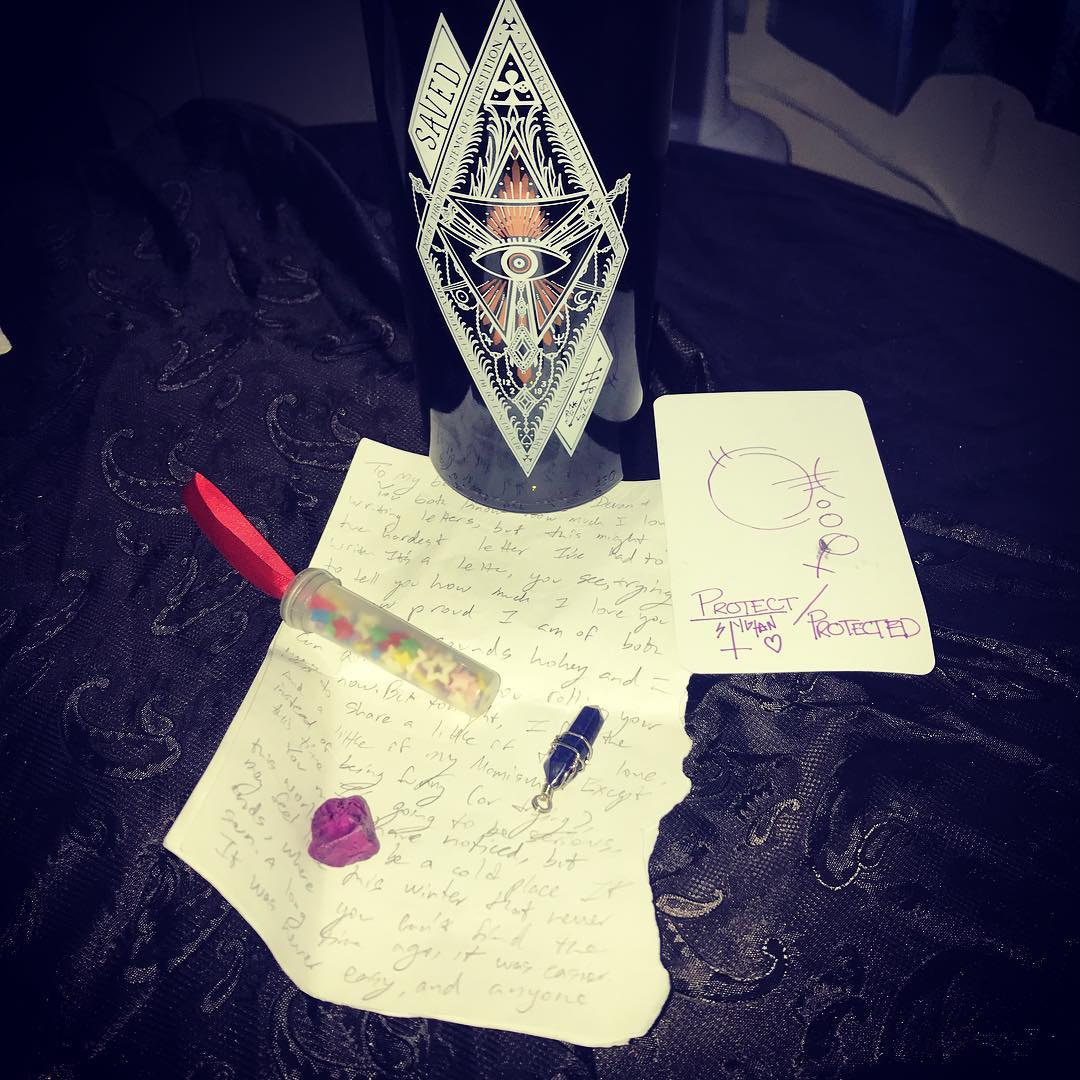
Souvenirs: Vial of drugs, crystal from the staff of a departed Sidhe, crystal won in the fighting pits by not boring the MC, letter of a departed friend to her children, sigil and bottle of wine from the RedCap DJ who asked Connor/Craig a favor.
Waking Dreams is one of those experiences that will stay with me for a long time, and even now, two months after the event, I want more of it. I want to experience more, and I want to create those experiences for others. There's a Mage game I've been threatening to do since I left the MES, and Kensei wants to be born still. I got to have one hell of a Dream, it'd be a shame to waste it.

Thank you.
Later.


I have a Patreon! If you want to catch my fiction and essays on storycraft for various media, consider donating. One dollar gets you full access to my work. 


Tuesday, May 7, 2019

Combat As A Form of Storytelling

For the past year now, I've been teaching classes on stage combat at gaming conventions. Using a lightsaber (because it's the great equalizer) to teach basic stage combat skills to role players. This past weekend, I was asked to teach a class on dueling at Waking Dreams, the Changeling the Dreaming blockbuster larp in Atlantic City. I was to teach the character as my character, Connor.

My main goal was to impress the notion that while dueling is a combat scenario, it's still a part of storytelling. "It's a conversation" I said during game. "Between parties who have decided to use violence as the language of discourse. The First Rule of Dueling: Do Not Get In One. Second Rule of Dueling: If you end up in a duel, Get Out of It. Rule Three: If you have to fight, make it public, make it a scene. Rule Four: Because if someone is forcing you to duel, let it be known by civilization that they are AN ASSHOLE."

We were all then brought in to a special fighting arena lead by one of the staff Non Players, playing the MC. A darkened bar next to the House of Blues, bathed only in garish red flood lights. Those that wanted to fight could fight. Those that wanted to watch could watch in the shadows. The rules were simple: First to five touches wins. No stabbing. Don't bore the MC.

I know some pretty kickass women 


And then I got to some of the best fights I've ever seen in boffer combat. One of them even included a grenade and a very reluctant "Boom".

Afterwards I got to talk to some of the players and especially Leanna, the staffer playing the fight-room's MC, about combat storytelling.

Which in itself was actually refreshing. For years, every time I try to bring up Combat in gaming, people gloss over, tell me we don't need to talk about it, or it becomes a session of reliving our worst experiences in role play. What I'm about to discuss is dedicated to the last, and in spite of the first two.

I think that we, as players, game designers, and game runners, need to discuss combat in gaming and make it an open dialogue. The first reason is obvious: Safety. We're in the fun making business here, kids. If we aren't being safe, we deserve the consequences.

As I was writing this, I had posted a fun meme about Player vs Player/Character vs Character combat, and it created a discussion about some of the more terrible experiences about players being attacked in the dead of night without ever knowing in real life who did it. There was no story to it, no fun. Just suddenly woken up, as a player, and told you're murdered. No discussion, no checking in with one another, no in character or out of character repercussions. Nothing. That's fucking traumatic as shit, and to this day, players (former now) are still trying to process the experiences that happened. 

The second reason we need to make combat a dialogue is almost important: It makes combat fun. When everyone is in on the combat, they're more likely to have fun. When we were told to make the fights interesting at Waking Dreams, we made the fights interesting. I got my throat ripped out by a RedCap while screaming bloody murder and saw at his back with my sword. I saw the MC get coup de grace'd (she got better, thank you magic-blood-ritual room)  in a gurgling heap. I've seen combat before, which can just boil down to playing the numbers game and landing points, but nothing beats putting on a show for ourselves and an audience.

Combat, as I said in the class, is a conversation told in conflict. It's a tool to help the story in four ways:

1) Instigate the plot: Bruce Wayne doesn't become Batman if his family isn't mugged and his parents die in the struggle. John Wick doesn't come out of retirement if criminal scumbags don't steal his car and kill his dog.

2) Escalate the Plot: Things have grown intense, tensions have risen. A fight breaks out. It doesn't end conclusively, at least not for one of them. Tybalt fighting Mercutio and Romeo setting the stage for all that comes after.

3)Conclude the Plot: The final conflict, when all has been said and done. "I have no words, my voice is in my sword." This is when all avenues have been closed, all other doors shut down. And either one or both must go.

MacDuff was done with MacBeth's bullshit

4) Show, don't tell:  Is the character someone who talks fast, but will run faster to the exits when the blades come out, but will tank a gang if they think an innocent is in danger? You can't tell someone that and make them believe it. It needs to be seen through action.

So, here are my thoughts on how to make combat in games fun and safe for everyone. This is not a comprehensive list, and I will be expanding on some of the points as time goes on.

Before I do that, let me break in, because I can hear people saying "Who are you to suggest this?". Actually, my favorite one I'd heard was 'I don't think most game designers are qualified since they haven't experienced ACTUAL combat.' (paraphrased, but close enough to the mark). So, an introduction: I have been a member of a stage combat collective since 2009. I have been on stage for fight shows at conventions and events throughout the tri-state area. I have written several of those shows, a treatise on a martial arts surrounding a certain fictional weapon, a follow up blog to that, and I'm currently writing the book for it.

And, for those of you looking for more of the practical: I have a black belt in JiuJitsu (Japanese, not Brazillian) and with the thanks of said ten years of being in a stage fighting collective I've gotten to experience and discuss a variety of styles ranging from fencing, longsword, escrima, kenjutsu, systema, kenpo, and a few of the kung fu derivations. I also have two years experience bouncing for an event planner.  I do not consider myself a trained martial artists. I'm an artist who has trained himself to research the martial aspects of humanity.

And now, Craig's ways of making combat fun, safe, and entertaining (The Short Form). This is not comprehensive, or exhaustive. I'll be coming back to these in the future and expanding upon them.

1) Role Play is a Collaborative Storytelling medium: This is not open to conversation or interpretation, this is the spirit of the law. Digital; Tabletop; or Live Action, everyone is in the room, at the time, to tell a story and to help others tell their stories. This includes the game runners, too, because sometimes the runners and the players need to be reminded that they're all in the end a bunch of fucking nerds making make believe.

2) You're partners, not opponents. This is one of the things I tell everyone in their first class of stage combat. The illusion is to make everyone feel the enmity or the tension, but at all times you're working with your partner to tell this story, communicating with one another, engaging them and making sure they are okay. Your characters can hate each other, you as players are in this together.

3) Fight like everyone's watching.  One of the first mistakes people make when making a fight is making the fight for only them. It gets boring, because they're too busy making the fight happen then making the fight interesting. In stage combat, there's always an audience watching, or else its just practice. In Role Play, you are always surrounded by your audience. Let it be performative, let your character show. Let the story show.

4) As partners, you're there to make each other look good. It's hard as hell to come off like a badass is no one in the room gives a shit. If your character got hit, sell it for all its worth. Scream your pain, shout your frustration. Put some bruise make up on after the fight. You can play with this, depending on what you and your partners decide.

It's how I won the crystal I'm wearing. Screaming bloody murder while getting eaten
5) It's okay to lose. I know the model is to see this all as a game, but role play is about what's the best story to tell here. What is the worst that happens if your character loses? Is that a fun challenge? Lets see what happens there. Also, with an audience, you get to do something a performer enjoys: Awesome 'death' scene. It doesn't mean 'expect your character to die' unless you and your partner are both down for that, but expect to sell your defeat.

6) Play out the consequences of your actions. This comes from stories where people try to shirk away from the consequences of their actions. The drawback of violence is that violence is often all that it breeds. The best story to tell is what happens next. The cycle of bloodshed continues and these violent delights have violent ends.

Again, this list is not exhaustive. Nor, I should point out, is this the only way to tell a story, let alone one through combat. But from the conversations I've seen over the years, and from the rise in focus on collaborative narration, we should start seeing combat as part of the narrative toolbox. From what I've seen of this past weekend, and from the seeming demand for it, performative combat is worthy of discussion. I look forward to any thoughts.

I have a Patreon. If you like Sci Fi Action, Urban Fantasy drama, and slice of life nerdery, considering contributing!


Wednesday, February 20, 2019

It's not an Error, it's a Feature: My love of Rememorex's Tracking Error mechanic.

Saturday afternoon. Nine of my friends come in, and we start to play 7th Sea. It's my first time starting a long form tabletop campaign with this group, especially with 7th Sea. It was a short game, due to the size. Amongst my post game notes I have, underlined:

KEEP THE PLAYERS INVESTED: USE TRACKING ERRORS NEXT TIME.

Tracking Errors were designed for the Omnisystem, debuting in Nerdy City's game ReMemorex. In a game of 80's horror in suburban land, tracking errors allowed players not in the scene the chance to effect it in indirect ways. This gave the game a sense of watching a found VHS tape and seeing weird distortions in the tape. It's been helpful considering that Sean Jaffe, the creator of ReMemorex, ran the game with more than a dozen players at one time in a West March style.

A helping hand, placing a shovel where a fleeing PC can use it to flee or bar a monster's path; A monkey wrench, used to give the PCs more of a challenge (within reason); a cameo, where the player takes on the role of an NPC in the scene; adding a detail to the scene to make it more sad/tragic/horrific/funny; or creating the greatest element of an 80's movie: a montage.

It's one of my favorite tools in gaming, right now. One of the bigger problems I see in games is that when players aren't in the scene, they lose interest. They lose interest, they start going off. They start going off, then it's hard to get them all back. It's why I hate combat in most games, why I hate splitting up the party. Time is precious and if half your game is spent staring at your phone looking at facebook, then you need to rethink your game.

By having a system like the tracking error, you decrease that. It makes being out of game part of the game.

One of the key facets of the tracking error is the ritual of using it. You grab a handful of dice (Ominsystem used six-sided dice, but there were always a handful of 20 or 10 sided just for the effect) and throw them on the table to declare. The dice and the numbers you get don't matter, the importance is the ritual of throwing the dice, breaking the fourth wall.

In general, everyone got one use of a Tracking Error per scene, otherwise there is nothing stopping someone from spamming its use. If you have a game system that has a number of meta-points to spend on certain effects, like Evil Hat's FATE Points or the Hero Points of 7th Sea, this adds an added element in the economy of your game. To use 7th Sea closely, Hero points are gained by doing things appropriate to the character and used to do BIG COOL THINGS and HELP OTHER CHARACTERS. I'm fairly even handed in giving them out and that makes SPENDING them a hell of a lot easier, especially since they may not get to do so if they aren't in the scene.

In short, by allowing people to do more stuff out of scene, they potentially buy in to doing more in scene because it nets them more points and the other players are more inclined to pay it back.

The Tracking Error is a simple solution to a persistent problem in gaming: keeping your player's focus on the table. You can't guarantee it, but you can make downtime become just another form of play. And that's a handy tool to have.

And I'm not afraid of my players getting confused with the new addition to the system. Most of them are Nerdy City and the Original ReMemorex players. But if you do start using something similar in your games. Let me know.

Later.


Friday, November 16, 2018

Telling the Story: Comparing and Contrasting Live Action and Table Top Role Play

At the beginning of the month I attended Metatopia, the annual game designer conference in New Jersey. At one of the panels I attended, we were discussing the development of Larp Rules (for the sake of fairness, while I have not signed a NDA, I am not saying the name of the rules for respect of privacy. Let the company release that info at their own time). I had some experience with larp rules based on tabletop mechanics, with my time playing and running in various New World of Darkness games like Requiem, Lost and Awakening. I also spent the last five years running the Dresden Files larp, which used rules similar to FATE Core.

What the session was, for me, was part of a larger conversation. Being friends with a plurality of game designers (slew? Cabal? Illuminati?) of multi media projects, and you begin to see and discuss the limits of each format you use. I've heard people taking a stand, siding with one or the other and I've heard others try to find a balance and a method to translate one to the other. This writing is my attempt, if it doesn't feel complete it's because I'm still processing and still listing my ideas. Expect more posts on this as we go on.

First of all, let us begin with what Table Top and Live Action role play games are. Shortly put, they are both collaborative story telling exercises. People gather and take on the roles of other characters to engage in scenarios often moderated in some way by someone known as a Dungeon Master (DM), Game Master (GM), Storyteller (ST) or some other title.

That's the gist. Now let's begin with how they differ. Going back to the Metatopia discussion, we were talking about how plots work differently within the two mediums. "Table Tops offer an exapansive experience while Live Action is about the focused event."

I'm going to use 7th Sea as an example of Table Top gaming, because I've been running it recently and it conveys a lot of what I'm looking for. You have a conspiracy between multiple nations spanning hundreds of miles and nautical leagues. You traverse the countryside, travel the seas, explore the vistas of the world around you.

This can be done in an entire session. Not that it should be, but it can. It can do this because the players (and GM) assembled have gathered together to share that experience at the same time. There isn't a lot in terms of physical setting, or plot, and the GM is the major source of what you are experiencing in the world. It's all one mass hallucination and half the fun is collaborating with each other in that experience.

With Live Action, everything is about that one single moment you are currently experiencing. Things follow a "What You See Is What You Get" method, even for events in a black box and have minimal set dressing. You are playing a character at the Vampire Court where the Prince is making his declarations and new members are being introduced and plots are being put in to place. You see the tables and chairs, the decorations, the darkened corners where plots and trysts and snide comments are made.

Things may have been done in the time between this meeting and the last, and will between this one and the next, but you aren't able to experience it all. You are someone experiencing the event, and while you may even have the ability to effect the event in some way, you will never see the entirety of it.

Live Action games are not unlike Event Planning. Having worked both, they take a lot of preparation before, during and after. One of the main things an event runner knows is that you can bring people to an experience, you cannot dictate the experience they will have. While you play the game, the agency you have during that time is more your own. You are able of telling a story with other players, of course, but the chances of you having that with everyone gets smaller the more people you have present.

For the tabletop, the setting and the plot are the things the players search out for. For the live action events, the setting and plot happens at the event for them to experience (or not, there are no guarantees). The tabletop's story isn't bounded by the physical location the story takes place, while the live action is. You can be in a sprawling campground or an abandoned town. You can't explore past those borders though in real life. The story is forced to come to you.

This makes live action events seem both spontaneous and expected. You never know what may show up, though you know at some point something will, somewhere, and someone will pick up on it. This also lends to a practice I've called "The Thrown Chair Policy" because nothing short of a riot will sometimes get a rise out of people if they don't want to engage and just sit at their table. Everyone at a tabletop event is aware of the plot, even if their characters aren't in the scene. Their ability to effect it is limited (in some games. Games like ReMemorex have mechanics to interact with a scene you aren't in). Tabletop characters seek out plot, not necessarily the GM's plot, but they seek it out. The Live Action awaits plot to come to them.

There are challenges to plot seeking in Live Action, Plot Hording and what I call "The Thrown Chair" policy. I've spoken about the latter a little bit in the past, I'll talk about both more in the future.

So, we've established that while Live Action and Tabletop gaming are a collaborative story telling element, how they tell stories is profoundly different. Tabletop games are expansive and deal in scope, not unlike movie cinematography. Live Action involves the immediate and focus on the moment as it is happening where it is happening, not unlike theater.

Can these two styles work together? Yes. I think they can, and there have been many attempts to make them work in the same space.

A good example was a game of Ex Arcana I experienced at GenCon a few years ago. Ex Arcana is primarily a larp by Nerdy City productions and focuses on the clashing of victorian magic traditions in a modern world as magic suddenly returns. We started the game at a table, being narrated our entry in to Indianapolis (we were all playing our characters from New York, and only the first time players started at the larp space). We got to interact with the world using the system (CHRONOS, which was card based) in ways we didn't usually and got to interact with the world differently. My character, Lin, is a social character, and while I used the cards to back up the roleplay in the live action, dropping the cards down felt more potent during those moments at the table.

In an example of the reverse, I've seen Live Action events that, when previously using mechanics, went roleplay only. The event worked better, seamlessly and people enjoyed it on a level we'd never seen before in the game.

I'm of the mind that the more mechanics you have in a live action game, the less effect you'll have. I've seen entire events ground to a halt when suddenly people were claiming major actions like fight scenes. That sort of slamming on the brakes at social events kills the energy of the group and is less likely to be regained. When a live action game suddenly grounds to a halt and becomes a tabletop is when things have an issue.

 Like the Ex Arcana example before, I've seen people get more and more in to their character where they can just 'roleplay it out' effectively making what they are doing an ad hoc larp. A friend of mine suggested that tabletops should be the main attraction while the larps are those special occasions you save for big events that change the landscape of what you're doing. I like that, and I agree with it to a degree.

I think that, with enough time and comfort and with every one on board, a tabletop has an easier time of incorporating elements of Live Action than the reverse. I think the best way a Live Action event can utilize what makes tabletop storytelling work in its system is to use it only when interacting with things outside of the event at hand. If you want to do something, or respond to something, that cannot be otherwise achieved while physically in the space, then is the time to go back to tabletop ethics. Doesn't have to be a straight up tabletop game, but the elements can remain.

To conclude, I think that Tabletop and Live Action gaming are two mediums that are intrinsically connected. They are stories that we tell to each other. How we go about doing them is how the two differ. There have been many attempts to combine the two, with varying degrees of success and failure over the years. The conversations about how work with the two has begun, and I look forward to what happens next.

I hope you enjoyed this. This post is by no means definitive or comprehensive, and not only do I welcome other opinions I actively am asking for them. I want to start the discussion, I want to see what we as players, designers, and runners, can come up with.

Thank you all.


I have a Patreon! In it you'll find various speculative fiction titles such as Bleed, a slice of life story of gamers and the roles they play; Do No Harm, a supernatural ER drama focusing on a burned out doctor tending to her figurative (and literal demons) during a bad exorcism; Bastard Children of Bastard Gods, a cyberpunk martial arts murder mystery where America is united under the most powerful corporations and only through fighting can one find freedom of expression; and many more! Support of patronage or signal boost is also welcome. I also have a Ko-Fi if you'd like to support


Wednesday, October 31, 2018

Review: Archangel Frame

Edit: The first go of this apparently ate itself, so I have to make another run of it. Thanks Blogspot. I'll be looking to switch to Wordpress sooner than later.

Last week, I had the opportunity to play Archangel Frame, a new larp created by J. Harrison and Max Frost, and administrated by Edge of Forever Productions. It is ostensibly a theater larp played live on campgrounds and remotely through Discord. I played remotely, which was an experience in and of itself, but for the sake of this post I'll be talking about the AF experience exclusively.

Before we begin, time to cite some biases. Jae Harrison is a friend, housemate, and my coworker for the better part of the last decade. Max Frost has been a friend for only slightly less than that and I have been their Storyteller for Dresden the entire time. That being said, I would not be writing this post if I didn't think the game was good. There, biases cited.

Archangel Frame is a game about emotional and existential duress in a time of big robots fighting gigantic demonic machines. The game takes it cues from Big Robot series like Evangelion and The Big O.  Much of what makes the game, though, is the worldbuilding that we ran in to. The players are members of one of five nations under attack from the Ectics and their gigantic Devil Engines and fight them in the mysterious and titular Archangel Frames, gigantic angelic machines that are strangely aware and potentially sentient (?)

Beladyr: a kingdom of heroes gone to bloat from corruption and the cult of celebrity

Iorvenn: a former expansionist empire attempting to turn their supervillain powers to good

Jessabrasca: a scientifically advanced nation laid to waste by the Ectics

Patch Islands: an archipelago nation of warriors dedicated to fighting for noble (if hopeless) causes

Consensus: a hivemind of individuals connected by similar (if not the same) source as the Ectics

Each player assumes a role in Project Gabriel, and this is where the relatively light mechanics take place, all of them surrounding playing cards.

Pilots are at the forefront, using the playing cards they need to beat challenge numbers to succeed in their tasks, but at the cost of emotional or physical stress. They cannot generate these cards alone. Only the Admins can do that, under stress from the project leads themselves, Admins dispense cards (and stress) to the pilots as they see fit. Support roles can dispense card sleeves that mitigate the stress. Mayflies (think the characters of assault on titan, limited armor attacking gigantic monsters) support the pilots on scene, making guesses to the color, suit or number of a card. The more specific the guess, the better the reward with the risk being, at best, their life.

I played Oghma, a mysterious Consensus Administrator who served as a strategist for the remote team. One part tactical analysis, three parts The Question, Oghma supplied information to the teams while also dealing with investigating strange aspects of the project and some of the elements surrounding it. I was playing remotely, so I wasn't at the site of the game. Though I have seen photos of the piloting rig played during missions.

You would think, playing remotely at a larp, I would feel periphery. This was far from the truth. I had access to a website that displayed mission detail, including real time health of the Frames. I had files on the types of Devil Engines that players could fight with pages of details, and I had access to character and player dossiers to assess details and plan accordingly. I was apart of the experience, and the remote team saved the game at numerous turns.

Oghma doesn't have a costume. Oghma doesn't NEED a costume. 


What made the game were the characters involved. From the Consensus members nonverbally talking (thank you Facebook Messenger) to interacting with the terrifying Evil Queen Director Tristana (thank you Kiri for the amazing roleplay, its always lovely to know who to work off of). I played the game from 9am until I had to leave at 9pm, and I was upset I was leaving early and I hadn't even left my house. I had legitimate fun interacting with the remote team and the larping game, of having an influence on both

The highlight of the game is the community that built around it. Much of the game's player base comes from The Edge of Forever games like Doomsday and Planebreak, of which Jae and Max are members of. These are people who tend to bring their A game and go for broke on their decisions. I've gotten to interact with them peripherally, and finally getting to work with them was a thrill.

Larping, for me, is always a game of playing off of other people. I'll change my character to better suit the feeling. Oghma was going to be terse, and mysterious, he came off more as inquisitive and just better at being non-verbal. The game demanded to be more active, and I'm grateful for that.

On a personal note, I had been burned out on larping for a while, more as a gamerunner than as a player. Largely that was because I was running games more than playing them. Archangel Frame was the first time in a long time where I entered a game as a straight up player, having done no build for the game itself. I got to play, and I loved this game and the community forming around it. I look forward to the next game, whenever that may be.

Thank you.

I have a Patreon! In it is my serial fiction, such as the gamer slice of life series "Bleed", street magic 'Letters to Maggie', cyberpunk martial arts 'Bastard Children of Bastard Gods' and supernatural ER drama "Do No Harm". Any support for the Patreon keeps me honest and writing constantly, and keeps the 'penniless' out of 'penniless' writer. Supporters get rewards such as access to live readings, podcasts, and cameos in future stories. Thanks.


Thursday, August 30, 2018

How "Playing To Win" Can Work

This essay is in direct response to Ericka Skirpan's article about how the concept of 'Playing to Win' in LARP is not larping. Ericka defines using Matthew Webb's concept of Nerdball, to put succinctly "an antagonistic and competitive angry killer bee mutation of long-form campaign larps" This article has brought about a small amount of controversy and discussion, and Ericka has asked for people to respond and come up with ideas about how 'Playing to Win' can work. This is my response.

I'm going to site my biases. First of all, I am on record since day one that I am a narrativist gamer by default and will adhere to telling a story more than winning any kind of prize at the end. Was the story fun? Yes? Good! Here are the thoughts

So one of the things I've noticed in the conversations post-article was that people are confusing the notion of competitive play versus 'playing to win'. Goal-driven role play is a valid thing, and I have some tips on how to enhance that later on in the article. What is being talked about, in the end, is Antagonistic Gaming.  Competitive/Goal-Driven role play is where the characters are achieving some sort of endgame, Antagonistic Gaming is when the players have an agenda and are playing against the other players and the ST/GM.

Larps work because they are collective experiences. There can be different styles of telling a story, but you are still all telling it together. You can have conflicting goals, and still tell a great story. In fact, some of my best and most intense moments in gaming were when my characters were at odds with other characters. My worst experiences is when I as a player have had to butt heads with other players or GMs, and that's usually because the individual was working for their own benefit and not for any of the other players.

 And note that I am consistently referring to the player and the character as separate entities in that last paragraph. One of the keys to making competitive play work is realizing that you are not your character and the other players aren't theirs either. You can all be shitty vampire lords backstabbing each other for the praxis of the blood drenched streets, but you as players shouldn't.

There is a saying that I have when teaching stage combat: The person on stage with you isn't your opponent, they are your partner. You might be playing bitter rivals, and you may be giving off the impression that you're trying to murder each other in an epic battle for control/dominance/revenge/etc, but you as players are in on this whole thing together.

And I see Competitive Role Play in terms of stage combat. You're engaged with people that want to be in that scene with you. Explicitly. Games are beginning to introduce badges or subtle-but-clear signs indicating if people are for Character vs Character conflict. Do not assume everyone there is down to play the same way you are. It's easier in a room full of a dozen people, that gets harder in a room full of seven dozen, and forget any assumptions when a game ends up in the triple digits. Know who is down for this kind of play.

Now that you know who your like minded players are, start talking to them. Talk about what your goals and styles are, exchange some notes. Stage Combat is all about developing a relationship with your partner, to get a feel for their rhythm or vice versa, otherwise everything looks clunky and people can end up getting hurt in real life. Keep an open channel going with each other from beginning to end of the competition. Calibrate yourselves to get the best effect for both/all of you involved. Know what works for each other and what doesn't, what actions are good and what are pushing it and keep adjusting so that it keeps the action going without causing out of character strife. The goal of a good fight is to make both performers look good win, lose, or draw.

And keep this channel of dialogue completely out of character. Your characters can hate one another, you folks are talking about tea or sports or whatever.

Some people may ask 'What about my Immersion'. I've been in scenes where I've discussed what is cool and what isn't with players I've been in antagonistic relationships with beforehand. Immersion is being in a scene with someone you trust and know where you stand with. It's trusting yourself to react as your character, to do That Thing, and knowing that you have ways and means of discussing it. You need to trust your partner. Accidents happen, as the several split lips in my life have taught me, but these were with people I trusted and kept working with because I spoke to them.

Basically, I'm talking about Bleed management. Not negating it, but addressing it. There can be moments of intensity where you need to ask for some backing down for a time. Again, calibrate your strikes so that it looks impressive against the character, but not your partner(s). There can be banter, there can be interplay. There have been nights of playing cards or Tak or whatever where I will utter the occasional "You bitch!" when my opponent does something clever (which is often) but it allows it to be playful.

Keeping that channel open, having that working relationship, will help when the inevitable denouement happens. It's the difference between "Good Game" and "Go Fuck Yourself", it also allows for the best response to losing "I'll get you next time!"

Another reason I like to look to Stage Combat for this is because Role Play is the one time where you are both performer and audience member. You are performing for yourself and for those around you. This should be fun and entertaining and not just two people being shitty to one another.

And in stage combat, we have gotten some Antagonistic Players as well. These are people who don't listen to their partners, don't calibrate, and strike as they see fit. These performers are seen as unsafe, and after a while no one wants to work with them. The same should be true in role play. They can come back when they prove they can work with other players. That's not gatekeeping, that's just safe practice.

I hope this has helped people, and I look forward to comments.

I have a Patreon, focused on my serialized fiction and essays. One of my series, Bleed, focuses on the lives of role players both in and out of game. It is released to the public monthly, and patrons receive early and immediate access. If you like what you read here, please consider supporting. That'd be cool of you.


Monday, July 30, 2018

"Shine on Circus Man": A look at Death and Critical Role

As many of you know I'm a big fan of Critical Role, the long running DnD let's play stream. Each thursday, a group of nerdy-ass voice actors got together and played Dungeons and Dragons. Currently, they are in their second Campaign. And in the past several episodes, suffered the first permanent death of one of the Player Characters. A lot has happened that I want to wrap my head around, and this post is my attempt to do so.

Spoilers abound after this. You've been warned.


Episode 26 of the new campaign saw the death of Mollymauk Tealeaf, the Tiefling Blood Hunter (a special class created by DM Matt Mercer), was killed in combat by the slaver Lorenzo as one half of the party was trying to liberate the other half from the slave cages. Molly's death is the first non-plot related death in Critical Role, the first to die on screen from battle wounds.

I remember watching the combat unfold live, and watching the community promptly and expectantly lose composure. And I wanted to break down and unwrap a few thoughts. Almost immediately, people were calling for rules questions and getting angry at Matt the DM and the guest player Ashly Burch. A lot of rage and denial got thrown out at them, which is uncalled for.

Here are a few things I noticed during the episode. The first: the slavers were originally placed under a slow spell, and one of them dispelled it. People immediately cried foul that Matt fudged with the rules. He didn't, and he cited the actual rule. You can dispel a person, creature, or effect within range. Matt cited and openly declared against the Slowed effect. He was within the rules.

Second, many people gave Ashly Burch, the guest character, a hard time for her character freezing up and purposefully giving herself disadvantageous rolls throughout the combat scene. It's a roleplaying game, she played the character's reactions. Liam would often do similar as Caleb and as Vax. Ashly is guilty of good roleplay.

Third, there were a lot of clues thrown that the fight was outclassed. Keg's (Ashly's PC) intelligence on the slavers was wrong. I have a lot of opinions on information gathering, and one of them is that information SHOULD be wrong at times. They were not all the same class, there were more of them than expected. The leader, Lorenzo, was using abilities that placed him at a far higher class than the PCs (or was not playing a standard human character which was implied in later episodes).

By the time of Molly's death, Matt was all but screaming at them without breaking the scene to concede the fight. DnD makes it really easy for people not to concede a fight. Some systems do, like 7th Sea or Fate Core. With Keg conceding, Ashly most likely averted a potential Total Party Kill.

Four, there were a lot of bad rolls made by the players. Nature of gaming. Matt is not the type of DM to ignore bad rolls.

Finally, death is a very real risk to Blood Hunters. Their powers derive from their Hit Points. Molly was knocked unconscious not by the attack, but by using his powers. The leader of the antagonist group is right over him, weapon in hand. Cages were full, and Lorenzo decided to make an example of Molly. Taliesin Jaffe, Molly's player, was the first to immediately call out that his powers would knock him out. He didn't recant it. He knew what Molly would do and knew that it would cost him that. He narrated his death, spitting blood at Lorenzo and never closing his eyes.

Death is on the table in a role-playing game like DnD. Death happens. If it didn't happen, what's the point of combat scenes? PCs are not immortal, and you know its time to wrap up the campaign when the party starts to think like that. Death happens, and there are many different ways to mitigate that. None of which were present at the time of the game. And with Matt's DnD games, Death is not always a matter of having a Cleric and a few diamonds on hand to make death cheap. Each time someone is brought back is more difficult with the costs raising or the ritual having to be more elaborate. Death is not a slap on the wrist, its a moment to decide the fate of the game.

Of course, a lot of this all came to me after the fact. Watching the game live was exhausting and shocking and the very nature of gaming. If the cast and crew of Critical Role ever feel like they don't have an immersed audience, the sheer amount of emotion pouring out for Molly-both good and bad-should show that they have an audience with them every step of the way.

The problem with that is, that audience isn't used to death being doing so suddenly. I think people forget some times that these Let's Plays are, by and large, unscripted save for the DM's plots and even then he's improving. Especially in a game where death has been relatively light and everything is kept in a cinematic narrative, its never been felt that Death is present. But there it is.

After Molly's death, I did some thinking, and maybe even a little bit of grieving. Taliesin Jaffe is the player I'd want to be in games. The one who rolls with things and changes it up, who gives his GMs enough backstory to give him something to come up later while leaving so many holes to be opened. He embodies his characters, from Percy's Traumatic Stress to Molly's blase' swish. I began to think of the positive things this had for the narrative of the whole game.

For starters, the campaign needed an on-the-ground Villain. The current setting is set at the dawn of war between two Empires. Which is great, but the players are running low-levelled no ones for now. So most of their quests have been jobs they've landed themselves during the time with the War being the backdrop. There has been no external factor that we know of trying to push the event. Lorenzo gave us that, here we have a dangerous villain who has proven to be the most dangerous physical presence in the game. With his murder of Molly, he has become the most hated character since Ripley (my favorite villain from the previous campaign) by both fans and players. This is good, having an immediate threat and focus is good. Otherwise it just gives the PCs some aimless goals until Something Else Happens. Now they are pushing forward on a task with more than avarice in mind.

Another reason is for character development. The party was already on the road to becoming more than just a band of adventurers working together for fun and profit. We were getting that in the later episodes with the raising of the Kenku child and their adventures in the party city of Hupperdook. They were getting to know each other and like each other, and let down their hair around each other long enough for foibles to be set aside. Molly's death, sadly, has become a glue to keep them all united. Beau and Caleb both seemed to resolve themselves to being better, or at least begin to acknowledge that they aren't and can't be as big a pair of assholes as they thought they were.

Also, to put it bluntly, Molly's death has made them cautious and set the tension at the game high. For story purposes this makes sense. Now, who knows what could happen? It's made the setting less formulaic and less complacent. Stephen King did something similar in The Stand. All he had to do was plant a bomb and decide who survived. The difference of course being that the bomb was planned but Molly's death wasn't. Sometimes, tragedy makes things move.

And roleplay is all about seeing the characters react. Watching the party, what left of it remains, grieve over Molly's body and perform an ad hoc funeral is painful in all the right ways to watch. But nothing more painful and beautiful to watch than to meet Taliesin's new character: the firbolg cleric Caduceus. He's of the Grave Domain, and sees death as a natural part of life. And while there have already been overtures both in game and the fandom to use his Cleric to bring back Molly, I think Clay's very presence tells you why this isn't going to happen: Death is part of the game. We fight liches in this world.

I look forward to seeing what the crew of Critical Role will come up with next. And of course, is it Thursday yet?

I have a Patreon, focused on my serialized fiction. One of my series, Bleed, focuses on the lives of role players both in and out of game. It is released to the public monthly, and patrons receive early and immediate access. If you like what you read here, please consider supporting. That'd be cool of you.

Friday, April 20, 2018

Critical Role

By the end of the week I'm writing this article, I will be caught up and up to date on the backlog of Critical Role, the world famous DnD let's play campaign. Run by Voice Actor Matt Mercer and casted by several of his friends and family members (all voice actors themselves) the series run two campaigns that, as of this writing, would take eight and half days non-stop to listen to. It is worth every minute. It airs every thursday night on Twitch and Youtube on the Geek and Sundry channel.

I had heard about it largely through word of mouth by friends. But I wasn't really interested in it because it was DnD. I've played a grand total of three sessions of Dungeons and Dragons. Not campaigns, singular sessions. My impression of the game had been...underwhelming to say the least, though most of it can be chalked up to lack of group synergy.  I'd heard of Critical Role over the years, hard to do so as a fan of cartoons, animes and video games that all employ voice actors. I'd started listening after learning about some of the characters and don't regret the decision. 

The biggest draw for me, going in and seeing their first episode was that these were all performers in a room with each other. The first thing about performers, there is a difference between performing for an audience and performing with each other. By the time the series had began, this troupe had already been playing for two years at the actor's homes. If this were a regular group, you'd probably feel closed out on a lot of things. Never happened here. They were accessible from the word 'go'. A lot of this has to do with that they were performers, and they got to perform now for each other AND an audience, which is growing with every week. 

It also has a lot to do with the GM stylings of Matt Mercer, who many would know as the voice of McCree from Overwatch. Mercer has been playing DnD since a child, and his parents and their friends were DnD players before his birth. His stylings were highly immersive, using his narrative and vocal techniques to create a highly immersive experience with detailed settings and characters that make both the players and the audience care.

I'm not going to go too in depth, because I want people to see it (It's on youtube and twitch on Geek and Sundry) or hear it (it's on every major podcasting network). But it contains several elements that, as someone who has been running games for years now, things that I now have saved as reference points. They include:

- Several duels between one PC and an NPC that managed to be both epic and immersive for the entire table. No small feat, I've seen people at the table tune out the moment someone is getting prime spotlight like that. Because of their performative comfort with each other and the improv (and larping) motto of "Yes And" they don't see it as the spotlight being off on them. They just use it as a means of showing off their character with the fight being the centerpiece. There are three good times this happens, but I'll share the first one since it's so early in the series (episode 17 of 115 of Campaign 1) for the example: Grog vs Kern 1

- It handles death well. For a game that makes death easy to come back from, especially for higher level characters, it makes every attempt cost something. It also deals with power creep very well because the antagonists feel even more lethal as time goes along. Any time one of the characters dies, and a resurrection is attempted, it takes time to do and most episodes are spent dealing with the aftermath. I like this, and I plan on getting the setting book for the game (which is now out using d20 rules) just to see the rules for the resurrections. Death is easy, coming back from it should be hard.

- It has one of my favorite written characters. I didn't know Talieisin Jaffe (no relation to my friend's and game designs Sean and Josh...that I know of) before this, but he became one of my favorite players and his character of Percival De Rolo became my fast favorite. The first man in a fantasy setting to develop a gun. Intelligent, a bit posh, and a truly conflicted character. His character arc and Taliesin's acting and way of taking everything in his stride is something I now aspire to. He gave his GM enough rope with his backstory to create one of the darkest arcs in the series that set the tone for the rest of the game and beyond. In the new campaign, Taliesin now plays my new favorite PC: Mollymauk the Tiefling Blood Hunter (a new class created by Mercer, who also homebrewed the rules for firearms in game).

- It created NPCs that are memorable. A lot of this has to do with Mercer's sheer personality and talent. But the NPCs of Gilmore, Victor, and Kima are all recurring characters that the players are thrilled to see almost as much as their characters are. Likewise, the antagonists get some good reactions, especially the Briarwoods and Anna Ripley who manage to cause such disdain in the players that the performance is touching.

- It allows Bleed. Much of the ending is some very good roleplay, informed by years of gaming with each other as these characters. From the reactions to character deaths to enmities to the small triumphs. It allows emotional Bleed to happen.

I'm gushing a bit while writing this. I'm gushing because this show is a thrill to listen to, and to watch as well. I some times listen to the Podcast and then go back to Youtube to watch the players and how they reacted. After eight days worth of listening, which span for me about four months, I'm hungry to have experiences like this. I want to be in tabletop games like this, I want to GM games like this. I have three campaigns for three different settings cooked up just because I keep listening to this series.  A friend has invited me to a DnD campaign and I'm already cooking up a Tiefling Wizard that is the cross between James Spader and Christopher Walken. Listening to Critical Role makes me want to play more, and that is something that I am grateful for.

So as I'm now five hours (two episodes) from catching up. With a backlog of audiobooks to make up for the lack of constant audio entertainment, I have to ask: Is it Thursday yet?

Friday, March 30, 2018

The Rules of Data Brokering (or, 'So you wanna be a Lore Monkey')

I've mentioned it before that I am a fan of information gathering in games. I enjoy finding Lore, whether it's from the setting or from the players themselves. Backstories, locations and items of notes, secrets and documents, the full gamut. I also like data analysis and piecing together those bits of information to put together a narrative, or be able to take those pieces and be able to add it to the narrative as need be. It's one of the reasons why I enjoy playing and running in conspiracy games, because there are so many dots to connect and ways and means of exploiting those nodes against each other.

I'm a real life Mekhet, what can I say?

That's really where I found out I was good at dealing in information, or at least a fan of it. I used my talents both in game and in real life to listen and discover tidbits from people. Never got to use it, but by the end of game I had accrued a few sizeable bits of information that could be exploited if needed. It's the preferred MO of my favorite character, the Mage Rhys. He uses his knowledge of the magic in the City to investigate and discern pieces of information. He doesn't get the whole picture, but he can get enough pieces and push them together. My 7th Sea character, Aiden, was a thief who liked to play the Inish stereotype while stealing your conspiracy plans early on in the game. Playing Lore monkeys and data gatherers is kinda my jam in most games. From teenager hackers to that guy who knows every one. Some players are out to game the system, I'm out to game the setting. 

Of course, not every game is meant to explore the setting too deeply. Some GMs are more use to riffing the plot and don't have a lot of information saved up to make investigations viable or information consistently useful. Sometimes, the Game has a very tight plot and finding information nets you dead ends. I've run in to several of these games and I tend to find myself getting frustrated. There's no point in someone trying to find info if that info isn't some that isn't able/worth to be discovered. 

So here are my thoughts for Players and GMs who find themselves want to add some data brokers in their games.

The Rules for Brokering

The Rule of Necessity

The information that you're dealing in needs to be of use to the other PCs in the game. Whether you're a player or a GM, the information you're doling out must have something vital inside of it. It doesn't not need to be relevant to the immediate situation, but it should be something that can be used later on as necessary. 

Lately I've been watching and listening to the Critical Role podcast. During the earlier parts of the series, during a conversation the players were having, an NPC name dropped two antagonists from one of the players backstories. The player got to respond to that, but nothing is done for ten episodes. 

You can use the brokers to seed future information, to put Chekhov's Gun on the wall and wait to see when it fires off.

The Rule of Contradiction

Despite the fact that you're suppose to be selling this information in game, you're trying to give this information away out of game. Info brokers are meant to serve as a means of forwarding plot or otherwise finding ways to enhance or aid the plot move along. Finding a contact that can provide access, or a key secret of an enemy. 

The key thing for Players and GMs to be aware of is that this is a plot for plot economy. You're giving out information to handle plot to potentially have more plot (personal or setting based plot) later on down the road. 

While talking to other players while writing this, the notion of someone who gathers information and doesn't share is seen as a problem player. This is especially true for newer players trying to catch up with the plot and are willing to pay. If you're a broker, or have a broker NPC, your job is to catch those players up and tie them further in to plot. Giving people something to do is good work and promotes interest...and a character tied to making some interesting decisions.

The Rule of Acquisition


There must be some means of tracking this information down. Maybe you're a hacker, maybe you're a spymaster with a network of informants. Maybe you're psychic, maybe you're a psychic hacker with a network of psychic cyborg informants (I've played this game before). Varys has his little birds, Holmes his Baker Street Regulars. The method is almost as important as the information.

The reason I say this is twofold: 1) How you find this information out provides the context of that information. Are you dragging someone across the coals looking for information? Are you bribing a susceptible cop? Do you have blackmail information on some senator? Are you collating data from social media using algorithms that I will never, ever, be able to understand? 

How you get that information is important to context. Interrogation is notorious for not giving the correct information, and that brief information. Blackmail is a good way to cause enmity, passive collections means less vital information. 

I played a hacker in the later '80s, one of the first all time hackers....Hollywood hacking had everything set up on the computers, so cracking data wasn't as good as using the phones more often than not. You could do a lot with a tapped phone and a pencil than you could with the most powerful IBM computer. 

The other reason why keeping the means of acquisition clear is because it helps establish character. Social characters tend to create a network of informants and co-workers that can be relied on. Interrogators are often cold and ruthless. Hackers are eccentric loaners, and so on and so forth. These characters provide a service, that doesn't stop them from being characters.

For players, whatever your means, be prepared to work for your information. Data is not free, you know that as a fact. If it's information that you can easily acquire then it probably isn't worth having, despite how powerful your stats are in game. The rule of the game here is to make sure this information is good, and vital, and can help further along the game. 

And for GMs, make the acquisition of this information challenging to the players. Not just in dice rolls and challenges, but in hooks and traps for the brokers as well. A broker who isn't invested is a broker who isn't doing their job right. Keep the broker invested, but make them work for it. 

The Rule of Subjectivity 

Simply put, information is open to interpretation. That's what the point of Data Brokers are for, to sift through the information and sell the context. The information you find can be wrong, or that the information gathered isn't complete. 

This is one of those where I have to separate the player and the GMs needs here. I encourage GMs to have multiple sources of information (whether they are competing brokers or not) that have different interpretations or pieces of information. I also encourage that information to be open to interpretation that can be gotten wrong. 

I've mentioned before that in my Mage game, I had characters who investigated things in different ways. Spirit servitors, Ghostly provocateurs, Scrying Windows, and Dream Visions. Depending where and when they ask, they will all get similar but different points of reference. I did this to tie the different and disparate PCs closer together and also to corroborate what was valid and what wasn't. Sometimes they got information wrong, sometimes they got it right.

Let me make it clear that wrong information does not mean a dead end. Sometimes getting things wrong causes its own storylines, or reveals something new about the world and its characters.

For players, You can be wrong about your information, but you cannot be the source of that, especially to the other players. If you're dealing information to your other players, you are working on a level of trust with them. If you consistently dead end them they will not deal with you and you'll be in a corner playing with your index cards full of information you cannot use. You're providing a vital service for the rest of the game in a support role, if you can't provide it, what are you doing?

Words of Advice

For the GMs

Playing the information game isn't easy. Because it requires having information about the plot already set up. This means that it is very possible for the PCs to figure things out early. If you're someone who prefers a plot driven story that players and PCs react to, then this may not be for you. That's fine. Let your players know that if they're edging towards information gatherers. Let them know that information may not be easy to get because things are in such motion that you can't get access to it. Be transparent that this is not the kind of game for that. Again, been there, it's a good way to lose a player. 

For the Players

Being an information brokering PC is a form of support role. Your job is to gain and disperse information. You have a valuable service to provide. You don't have to be a friendly character, you can have your ulterior motives, but you are playing to further along plot. Information that isn't being used is useless. You drive the plot bus that the other players get on, and you're the one with the map navigating to the next stop. Be prepared to work for the information you're looking for, be prepared to  work with the GM to get this information.


The information broker, or the lore monkey, or how you want to call it is one of my favorite types of play in the game. It's discovery of the setting and sharing that information that makes it intriguing. It's digging in to the world and digging yourself in to deals and troubles. I love doing it because it allows characters to delve in to the setting by using their wits and their words. I hope my words have helped you, and I'd love to hear your experiences with dealing in information in gaming.

Later

I have a Patreon, focused on my serialized fiction. One of my series, Bleed, focuses on the lives of role players both in and out of game. It is released to the public monthly, and patrons receive early and immediate access. If you like what you read here, please consider supporting. That'd be cool of you.


Monday, March 12, 2018

Bleed Chapter 2

Second chapter of my Patreon series: Bleed. Bleed is the ongoing adventures of Role Players both in and out of the games they play in. Bleed is currently ongoing, if you'd like to read more, consider Pledging. You'd be helping a writer make a name and keep him writing. Thanks.


The cleanup after game was more somber than usual. Of course, no one liked to stay and clean after six hours of running around playing pretend. But it needed to be done. Trash was put in to bins. Floors were swept, cups and dishes were washed and dried and put back in the studio’s communal pantry. The studio liked the troupe, and the troupe liked them back. And it was precisely because they cleaned up and paid their rentals on time that the relationship kept being mutually friendly. 
When the cleaning was done, Callie made the call. “Okay folks, you don’t have to go home but—“
“Get the hell out.” Most of the group intoned, some more cheerily than others. 
“Yep,” She said. Her short-cut strawberry blonde hair was slick with sweat and she looked ready to pass out. It’s hard running around a packed studio in the summer wearing black clothes. Where most of the other dark costumed players were some degree of extravagant, eccentric, or both, Callie’s was utilitarian. A button down black shirt that hung loose and a pair of black cargos. She had the exhaustion of someone who had run a marathon.
Such was the life of a storyteller. 
Tom thought that, compared to CJ, Callie was holding up well. CJ looked practically hungover. The color was drained out of his cheeks and his eyes were sunken. There was no real mirth left in the man. And Tom could sympathize with him on that. 
For Tom’s part, he very quietly and slowly cleaned the dishes and cups. Glasses of wine, juice, soda. Most of the plates used were paper and could be thrown out, and most of the stains on the not paper plates were pizza or something easier. 
He was aware, somewhere in the back of his mind, that the crash was settling in. The rush of an intense scene started to come down. His movements were slow, he didn’t really notice anyone as he worked, until Callie made for final call. He was day dreaming, he just wasn’t able to respond well. Everything felt slower, the lights brighter. 
When it was time to roll out of the studio, he sidled up next to Mara and Sam.
“You want to go home,” Mara asked Tom. “Or do you want to stay for afters?”
“Afters,” Tom said, though even he could hear the tone in his voice that screamed ‘bed please’. “I’m owed a drink, anyways.”
The couple nodded and the three housemates made their way in to the elevator. 
“Tom!” Someone cried. “Wait!”
The doors closed just in time to see CJ’s face rush up to the doors. They heard a muffled ‘Damn it’ from behind the door as it descended down.
“Meet you in the lobby!” Tom yelled, but probably didn’t make it as the elevator lowered them down the sixteen floors. He rested his head against the door, closing his eyes. Closing his eyes was good. 
He heard a rattle from behind him and saw Sam with a bottle of water in one hand and opening up a bottle of aleve in the other. 
“Take these,” they said. Tom was about to ask why and they answered. “The lights are too bright for you, aren’t they?”
Tom blinked, and realized he was right. “Yeah.” He took both without resisting. Even if it wasn’t the onset of a migraine, he didn’t want to deal with it. Sam, who often had migraines of their own, always had a bottle of aspirin or something on them at all times. 
“You okay?” Mara asked Tom.
“Yeah,” he said, forcing a smile. “Just tired.”
“Wanna talk about Curve?”
“Not yet,” He said, continuing his use of the elevator doors as a head rest. “It’s slowly hitting me that he’s gone.” 
“Yeah,” Mara said. “That’s a lot of psychic real-estate you two shared.”
“I have an idea for what I’m going to do for his last act though,” Tom said. Both Mara and Sam quirked an eyebrow at him. “Nope, saving it as a surprise. Just because he’s dead doesn’t mean I don’t get one last hurrah.”
The elevator opened. A large section of the troupe was already outside, most of them grabbing a smoke. Tom immediately saw Lisa in the throng, talking idly with Rachel and Dinah. Simon came out of the elevator next to them, and kept walking. 
“One of these days,” Mara said. “CJ is going to kill him.”
“And then his character,” Sam added.
Tom nodded, numbly. Sam had made the right call, he could feel the migraine set in. The Aleve had a few more minutes to kick in and chase it down. 
The next elevator opened, revealing CJ and Callie. 
“Oh, thank God.” CJ said. “You waited.” He seemed out of breath, the run had not been easy on him and he’d been doing enough running.
“Siege,” Mara said. “Can you please drink a bottle of water.”
“Why?”
“You look like like dried out shit,” She said. 
“Don’t take it personal,” Tom said. “These two have been mothering me the entire ride down.” 
CJ nodded at that, and Callie spoke up. “I’ll make sure he Hails Hyrdrate before bed tonight.” She smiled, and then flinched a little. 
Tom felt bad for her. Callie never knew where she stood with CJ’s friends. “Appreciated,” he said. 
CJ fished something out of one of his pockets, an index card with his big blocky handwriting in sharpie on it. “I have something for you. A character concept, if you’re up for it. Consider it my contribution to combatting the mourning process.”
Tom looked at the card, cupping it so the others didn’t see.
“Oh,” he said. And then he read it again. Then he got it. “Oh.
Tom looked back up to see a big smile on CJ’s face. This wasn’t forced, and the exhaustion he previously showed seemed to abate for a time. “If the party is over, I’m making sure I bring the fireworks. Wanna help me set them up?”
“Player or Non-Player?” Tom asked.
“Player,” CJ answered. “But with some guiding notes from me, at least at the beginning.”
Tom looked at the card again, and then pocketed it. “You’re a bad man,” he said.
“I know,” CJ said with a dramatic bow. He opened his arms and hugged Tom, who returned it openly. “That was a great scene.”
“Thanks,” Tom said they broke apart. “That was a great game.”
CJ shrugged at that, and then went on to hug Mara and Sam.
“Siege,” Sam said as they hugged. “Are you sure you want to do this? End the game?”
CJ didn’t answer at first, then he said. “Yes. Yes, I do. This sounds dramatic but this is one of the first game nights in a long time where I feel like I’m leaving clean. If that makes any sense.”
No one responded to that, no one really knew how to. At least, Tom felt that he didn’t know how to respond to that. 
Mara cut through the silence, “You coming to afters?”
CJ opened his mouth, and then closed it. Then he shook his head. “No. I’m beat. Besides the trains are fucked and we need to get back uptown.”
“I don’t know why you moved to the Bronx.” Mara said, accepting the answer as much as Tom knew she was capable of. 
Callie poked over CJ’s shoulder in answer. “Hi!”
“Oh,” Mara said in a forced deadpan. She broke out in to a wry smile. “I suppose you’re a good enough reason.”
“Thanks Mara,” Callie said, breaking out in to a yawn at the end of Mara’s name. 
CJ kissed Callie on the side of her cheek. “Yeah, we’re both beat. Night all.”
The all said their goodnights. By then, mostly everyone outside made their way to afters. CJ and Callie turned left as the exited, towards the trains. 
“You lied,” Sam said.
“I know,” Mara replied. “I’m still not sure she’s good enough for him.”
They all started moving, turning right towards the diner. 
“Come on,” Tom said. The air was muggy and Tom could already feel the sweat coming down as they got down the block. “CJ clearly loves her. And she loves him.”
“Siege is…” Mara stopped for a second, clearly finding the words. “Forget it. I worry about him.”
“We all do,” Sam said.
“Especially now,” Tom added. “This game is his pride and joy. He’s been toying with it since college.”
“Before that,” Mara said. “He came up with Moonlight in High School. He shared it with me. He got in trouble when Sister Catherine saw his notes, because she thought he was a Satan worshipper.”
“Little did she know,” Tom said. He was just getting used to the absence of paintings that CJ had done. Paintings of mystical tableaus and hand drawn signs and sigils littered their friend’s former room and parts of the living room. What became research also became a hobby and part of his life. It was something the four of them all appreciated. 
And, Tom thought with a smirk, is something that can be brought back in to game.
They walked the rest of the way talking of small things. Jake’s moving in, a possible game night at their place the next week or so. Neither Mara nor Sam asked Tom about the index card CJ slipped him. They knew better, and they wanted to be surprised. 
The diner was right down the street from Penn Station, and was open very much in to the early hours. Mara, Sam and Tom all walked in to the harried looks of the staff and the loud chatter of the diner. It was empty in the front of the diner, but the closed off back was a bustle of noise and motion.
“I think our party is in the back,” Mara said.
The hostess at the front nodded wearily. Poor thing. The diner had a love/hate relationship with the troupe. Sure, they loved the business of two or three dozen people coming in every month. The problem came with these were gamers talking over each other, moving around. That’s a lot of orders getting confused, or doubled, or lost. That’s a lot of tips. It’s in instant rush hour for the staff of the diner, and it’s usually very difficult for them. 
And the gamers aren’t usually in the best of headspaces. They’ve played at least six hours of games. They are tired, hungry, and probably in need of a drink. Often, most of them need a shower too. They’re busy focusing on getting their makeup off, or changing in to more comfortable clothes. When he did go to afters, CJ was usually the last to arrive because he had to pack up Siege’s armor. 
CJ once explained the concept of Afters to Tom as a form of ritual. “Look,” he said to him one night many years ago, back when Tom was just getting started in his first game. CJ spoke to him like the mages he often played. “We just spent hours as other people. We lived their lives, we shared their challenges, their successes, their failures. We lived, learned, loved and loathed. But eventually, sooner or later, we must leave that world. We must come back to the Really Real. We can take what we learned, but there are times when the masquerade ends.”
“Afters,” he said. “Afters is where people go to the diner or bar and be people. They get to tell war stories, they get to reminisce about other scenes or games they take part in. They get to destress from the tensions of the evening. Mostly though, it reminds us that the people we’re around are not wholly the people we’ve been with the past few hours.”
“Peter and Chopper aren’t the same per---okay, that’s a bad example. Sam and Penbroke aren’t always the same person. They have overlaps, and while there may be some people who may disagree with what Penbroke did in game, afters reminds us that Sam is just a nerd like us who is playing pretend.  Some games, like the ones at conventions prefer to Debrief people before heading out, which is a bit more formal. We don’t have the time at the studio afterwards. So we stick to what we know. We leave the town of Moonlight and we go back to a greasy spoon in Chelsea. We step out of the magic circle and we go back to the waking world.”
The memory had a bitter note to Tom tonight. CJ, who once espoused the virtues of afters, shying away from it. Mara was eying Callie for being the deterrent, but it wasn’t just her if at all. CJ was burnt out, and they all knew it. He was burnt out on the game he built, and on the troupe that formed around it. But CJ had this world and his game in his head. Afters doesn’t really apply when you’re the Storyteller, when you’re expected to bring the world with you so you can prep for the next month.
Mara and Sam found an empty table. Tom looked around and saw only members of the troupe. He remembered when a group of off duty cops were in the corner and giving the group of weirdly dressed nerds the side eye as they discussed attacks, feeding on people, drugs, and a million other things that probably had most of them on watchlists for terrorism or the terminally pathetic. 
The cops were nice, and while they didn’t get what these guys did, they realized they were just people. That was key, really.
As Tom sat down, Tyler stood up. The thin, scraggly man spoke clearly with a received pronunciation. “Gentleman, Ladies, Amorphous and Non-Binary,” he raised his beer to the air. “To Curve, and Tommy Flint.”
“Curve!” Most of the people cheered. And then applauded. One voice cut through, “Any clues on whodunit?”
Tom smiled, “Find out in game.”
“No!” Rachel said. “Come on, tell us.”
Tom shrugged, “Nope. Because you all finding out what the fuck just happened is one of the reasons I’m rolling up a character for next month and not taking a month off from you weirdos and have some kind of a social life that allows me to be me.”
A cheer of laughter. Tom raised a glass of water. “Thank you all. I will give you a small hint though and just say that I’d like to thank my killer and CJ, both of whom are bastards who have made me happy with Curve’s end.”
Applause from the group, but hesitant, stunted. He took his seat. Mara and Sam smiling.
“You’re a bastard,” she replied. 
“My father would agree,” Tom said, which got a snort from Sam.
“You kept them focused on CJ to keep them off your back.” Tom nodded enthusiastically. “Well, I’m glad all those years of being a vampire actually taught you something.”
“Yes,” Tom said. “Being a blood sucking fiend.”
A glass of soda landed down in front of Tom. Holding it was Lisa. The black wig and dress was gone, replaced by a greyish blue dye job and a black and white t-shirt and jeans. A pair of glasses on her face. 
“I owed you,” she said. “May I sit.”
“Of course!” Mara said cheerily. Tom eyed his roommate. Mara just accused Tom of being sneaky, but everything he learned he learned largely by watching his roommate at work. Mara glanced back at Tom, and flashed a bright smile before Lisa could manage to notice. Only hummingbirds, Sam and sometimes Tom were fast enough to see her at work. 
“So,” Mara said. “Lianne was involved.”
“Love,” Sam called. It wasn’t exactly chiding. 
“Oh, fine.” Mara capitulated. “But that was an awesome way to end the game.”
Lisa pointed to Tom, “He found the ashes.”
“You put them on.” He replied. “You could have told me to go fuck myself.”
“I’d do that anyway,” She said. “But figured you could use the break. You’ve had a busy night.”
Tom shrugged. “I can’t complain.”
“No?” Lisa asked.
“No. I did get strapped down by a beautiful woman.”
Lisa quirked an eye at that. “Why Mr. Flint, I didn’t know you went that way.”
“I am a man of mystery,” he said with confirmation.
Lisa made a noise. “Few men have any mysteries.”
“Amen,” said Mara. Which got a dirty look from Tom and Sam, possibly for multiple reasons. “Sorry.”
Tom looked back to Lisa. “Anyway, it’s been a pleasure working with you, Lisa.”
“Same here, Tom. Any chance you want to have ties with Lianne and your next character?”
He shrugged. “Probably not going in. We’ll be running in to each other, I’m sure. But I think having ties in would cause some bleed from Curve. Start fresh, ya know?”
Lisa nodded at that. “That’s fair. You have something in mind, for the character?”
“Yeah,” Tom said. “CJ gave me a concept to noodle.”
“Oh,” Lisa said. “Oh, now I’m terrified and excited at the same time.”
“And thus, my work is complete,” Tom said dryly.
“At least until next month.” She reached out, scratching him playfully at the back of his head. The way Lianne did to Curve during their scenes together. “I should go order some food before our waiter forgets me. It’s the guy who looks like he was here when they built the place in the fifties.”
She got up, leaving the two alone. 
“Shut up,” Tom said to the table. 
“I said nothing!” Mara replied. 
He idly took a sip of his soda. “I can hear you thinking.”
“And?”
“No.”
Mara gave him an incredulous look. “Tom. I’m your friend, and I love you. Ask the girl out already.”
“No.”
“Why fucking not?”
He rolled his eyes. “For the tenth or eleventh time. She and I are playing roles. Our characters were in a relationship, we aren’t. We don’t really hang out unless it involves game. And we’ve never really never had a reason to. We’ve gotten together to talk about our characters, or we’ve gone on group things with the rest of the troupe. We’re friends in here, and acquaintances out there.”
“Did it ever occur to you that maybe she’s waiting for you to ask her out?” Sam asked.
Tom gaped at them. Mara was the usual instigator and designated wingman, Sam kept to themselves.
“I know I’m the only person who identifies exclusively as male in this triumvirate,” Tom said. “So let me know if I’m overstepping a bound. But where the hell is it written that a guy must be the one to initiate? There’s a lot I don’t know in the world, or how women work. But for once, just once, I would like someone else to make the first move.”
Neither Mara nor Sam replied to that. “Besides,” Tom continued. “This is a larp, not a dating service. She’s not looking for love here, and frankly neither am I.”
“We found it here,” Mara said. “So did Peter, Dinah, CJ and Callie and a few others.”
“Yeah,” Tom agreed. He weighed his next words and his tone, trying to get his point across without trying to sound condescending or rude. “ I’m not any of you. I’m me. I’d rather have the relationship I have with her now than fuck it up just because I think she’s cute.”
“You have chemistry,” Mara said.
“So does dynamite,” Tom retorted. “Let it lie, Hill. Table it for tonight.”
Mara blinked, and then sighed. “Fine.” She said with just a little bite. “Tabled. I think you doth protest too much.”
“Noted,” Tom said. There was no heat or anger between the three of them. They’d seen and done so much together that this was not even a blip on their radar. They loved each other, in their own ways. And Tom was grateful for that in his life. But they all knew the lines they don’t cross unless they thought it completely necessary. This wasn’t one of them. Not tonight. Possibly not ever.
Possibly. 
Tom heard his name being called across the room, he turned to see one of the many Matts in the troupe sitting between two of the many Seans they had. 
“What was that, G?” Tom said.
Matt G. asked again, “You’ve been larping for a while. How have you dealt with closings before?”
Tom thought about it and shrugged. “Depends on the game. There was one game where people tried to get a storyteller to step up and then no one stepping up?”
“Why?” Matt asked. He was one of the newer players, joined maybe a year ago. It was his first larp. 
“Being a storyteller is a job,” Tom said. “Most players don’t think about the amount of time it takes most STs to plan a game each month. There’s plot set up, including challenges and NPCs, getting people to play those NPCs, making sure there are props that can be used for those NPCs. Puzzles, challenges. Then you have managing in game emails, making sure player questions and out of game scenes are taken care of. Then there is the actual running of game which is having your attention diverted in ten different directions to make sure people aren’t too bored or plot isn’t being hogged. People don’t really think about those sorts of things. They just want to play their characters every month, maybe a few scenes in between, and call it a week.”
“In short,” Tyler said, in his crisp English accent. “No one wants to burn out like CJ clearly is.” He looked at me with a lazy English drawl, “No offense. I know he is your friend.”
Tom only bristled slightly. He could feel Mara and Sam next to him tense as well. “No,” Tom said. “You’re right. Siege is burnt toast. And he’s going to end the game on his terms. Now, going back to your other question. That was one situation, people wanting to continue the game after the ST is gone. Then there is the flipside. Everyone quickly and quietly packs their bags, says their goodbyes, and begins looking for the next game.”
“It’s how we got here in the first place,” Tyler said, followed by a few nods and grunts of agreement from Peter, Dinah, Mara, Sam and several others.
Gavin, one of the players who agreed, spoke up. “About a dozen of us, CJ included, were all part of a vampire game a few years back. It was fun.”
“Of course it was fun,” Peter said, Dinah resting her head on his shoulders. “You were Prince and the center of attention. I spent most of the time keeping the assassins off your back.”
Gavin nodded, sniffing the air a little. “Subjectively fun, then. But the backstabbing in the game got bad. It stopped being about the characters fighting each and people started coming in to games trying to out play the other players.” He said this part a little louder, so that the others at the end of the table—which Tom noticed included Simon, who had been arguing with CJ earlier. “The game got toxic, and the ST of that game decided to close up shop. None of us wanted to work with most of the others again, and CJ was so pissed off he took that setting he built years ago and turned it into a game. Most of us have been there ever since.”
“I’m sure someone is going to try and keep the game going,” Tom said. “CJ built a system and a world where even though there is tension, that’s not the focus.” Says the man politically assassinated by his lover, he said internally. “And six months is a long time. I also think that CJ closing up at EmpireCon might mean something more.”
Matt G eyed him, and Tyler took it up. “You think he might market the setting?”
Tom nodded. “I think he’s been toying with it. I think it could work.”
“You lived with him,” Gavin said. “Wouldn’t you guys know?”
Mara, Sam and Tom all shook their heads. Sam spoke up for them. “We kept ourselves out of the making of Moonlight when we all moved in. We knew that living with the head storyteller, let alone the creator of the setting, would be seen by many as a conflict of interest.”
“That had to be difficult,” Matt G said. 
“Sometimes,” Mara said. “We’d ask questions on his off time and he’d shoo us off. Or he’d get frustrated because he was worrying at a thought and couldn’t share it with us because it was plot we were going to have to deal with.”
“Sounds rough,” Matt said.
“But yeah,” Tom continued. “We’re going to have to see our options in the next few months. CJ usually has a plan. He set a specific date. He’s up to something.”
“Well,” Simon said from his far spot at the table. “If he’s giving it up, I can always run the game.”
Tom said nothing, though it felt like a lemon was stuck in his throat.
“We’ll discuss it later,” Tyler drawled.
“What?” Simon asked. “You just spent five minutes discussing it, and now we’re going to stop here? I’m saying I can run the game.”
Tom could see Tyler’s jaw clench underneath his scraggly auburn beard. “There’s a difference between talking about the future of the game and throwing your proverbial hat in to the circle. Not tonight.”
Simon shrugged. “I think the game could do with a new direction. If CJ is running out of ideas.”
“Shut up.” Dinah said. The small red head had been napping at Peter’s side so long that Tom had nearly forgotten she was there. “Please, Simon. Just shut up. Because, I don’t know if you realize this, but you’re probably one of the reasons CJ is quitting. Like do you get that?”
Simon blinked. Whether the stunned look on his face was from the realization or just the barefaced calling out was something Tom couldn’t discern. His mannerisms were very well controlled, making him a hard read. But when he did slip, it spoke paragraphs but not necessarily in complete sentences.
“I pay every month to play here.”
“No,” Dinah said. Any signs of sleep or relaxation was gone. She was awake and on. She was a five-foot-tall fireball. “You pay every month to come here and be a snide fuck while waving your sheet around demanding CJ’s attention. You say you pay to be here like that entitles you to something. What does it entitle you to? Do you see the rest of us doing that to him? No. We wait our turn and we work with him. You don’t work with him, or really with any of us. You work against us.”
“Jakis is an antagonistic character,” Simon said. 
“But Simon isn’t.” Dinah spat. “You don’t actually role play with any of us, you just sit there and be smug, and then when you want to do something you mug Siege or Callie for their time to try and get what you want. You don’t take any one with you. You don’t roleplay, you don’t respect that there is a story being told.”
“I’m just trying to be effective,” He said coolly with a smile. 
“The destination is only as important as the journey,” Peter said. “’More matter with less art’ doesn’t mean that shouldn’t be any art.” Peter was an old hand at gaming. He knew the score and knew problem players. Tom had seen him talk to players before when there were conflicts. But he didn’t have Dinah, then, and her snapping off at Simon while just minutes before sleeping in the crook of his arm makes this less moderate than he probably intended.
“You play the game your way,” Simon said, still cool. Tom was worried about that. It wasn’t acting. It was level because he was still level. “I’ll play it mine.”
“But you don’t play,” Dinah snapped. “We’re all here to tell a story. You just want to get to the punchline. There’s no patience, no passion. It’s job-solution. That might work well in other games but this is about The Story. There’s got to be foreplay before we get to the big finish,otherwise it’s forced. What did we earn?”
“I don’t see it that way,” Simon said.
And then Dinah said the words that ended the night.
“God for Rachel’s sake I hope you fuck better than you game,”
And the entire room went dead still. Rachel, who had been sitting with Lisa for most of the evening. Got up and walked out, bag in her hands. Simon, still coolly looking at Dinah and Peter, got up and followed her.
Everyone in the room was still stunned when Peter got up. “I think we should go.”
“Fine,” Dinah said in a huff. “Needed to be said.”
Not tonight, Tom thought. This was fighting at a funeral. This was shouting at a wake.

And then he caught himself. This was just a prelude. Next month was going to be the real funeral. 

Bleed continues on my Patreon page. If you'd like to read more from the adventures of the Bleed cast, and several other series, consider pledging or sharing.